Animations from the calculations
Every animation starts paused and provides a time or parameter slider, static export, data, and text description.
Figure gallery · Technical report
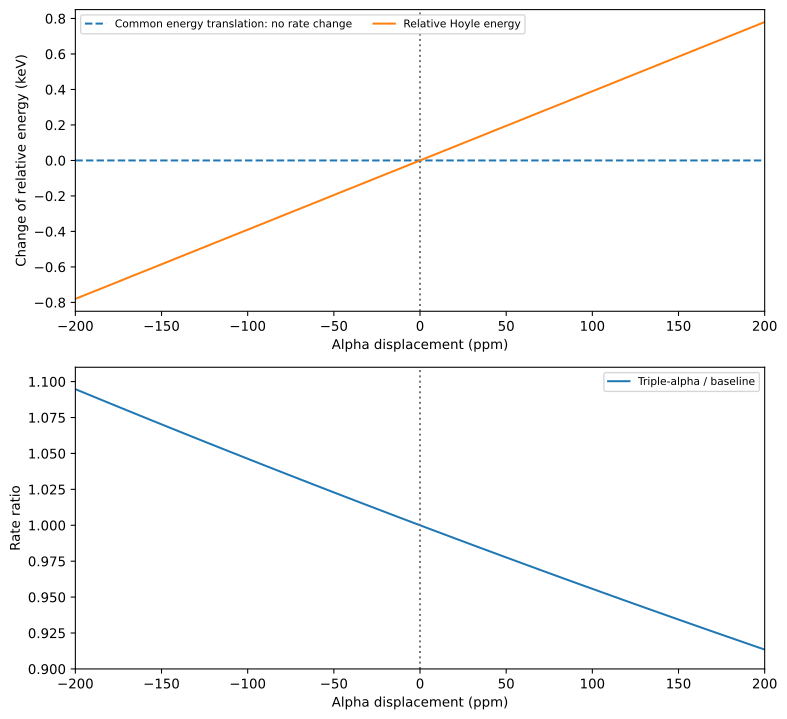
The three-alpha threshold defines zero energy. The published derivative changes the Hoyle energy relative to that threshold. A common translation is an analytic null. Separate absolute threshold motions are not available for every nuclear scenario and are not invented here. Stellar temperature is held fixed.
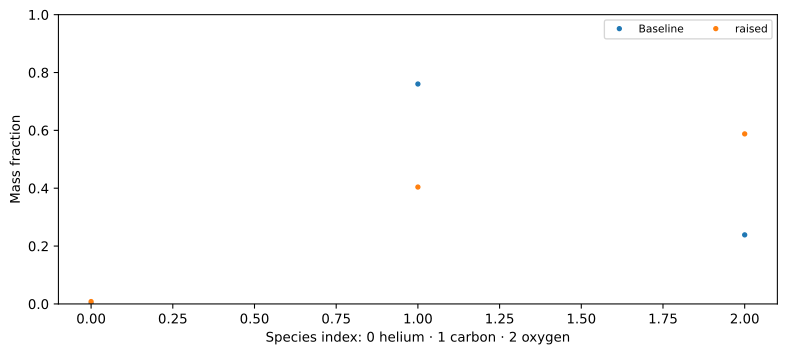
Stored parcel trajectories are linearly sampled in physical time, preserving nonnegative mass fractions and the baryon invariant. The density-compensated case raises the resonance by 39.9 keV and increases density by the derived exponential factor. It is a controlled parcel identity, not a stellar density prediction.
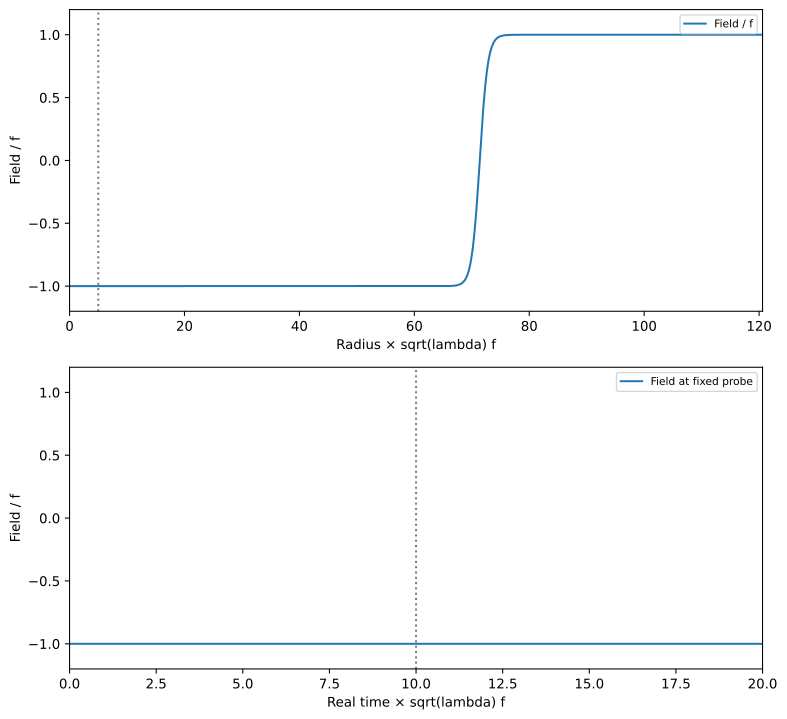
This is the saved Lorentzian evolution, initialized from a tunneling solution. Euclidean radius is not used as a clock. The flat-space calculation includes field energy but no material medium or collisions; the independently calculated stellar screening profile is in V10.
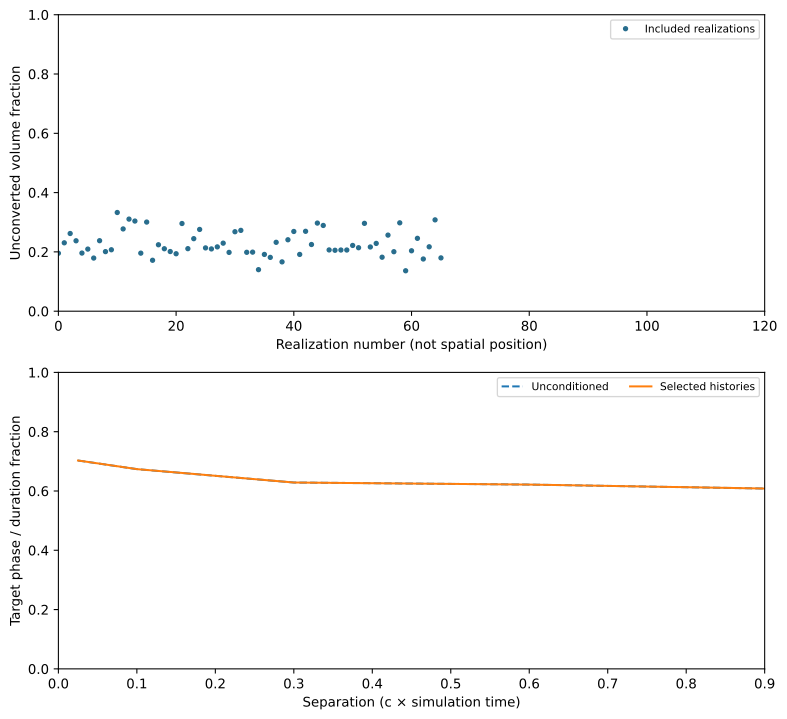
Each dot is one saved random realization, not an invented civilization or a map cell. Selection changes the statistical sample. Past-light-cone mode evaluates the target at emission and applies the same duration requirement. These are opportunity diagnostics without a measured emergence law.
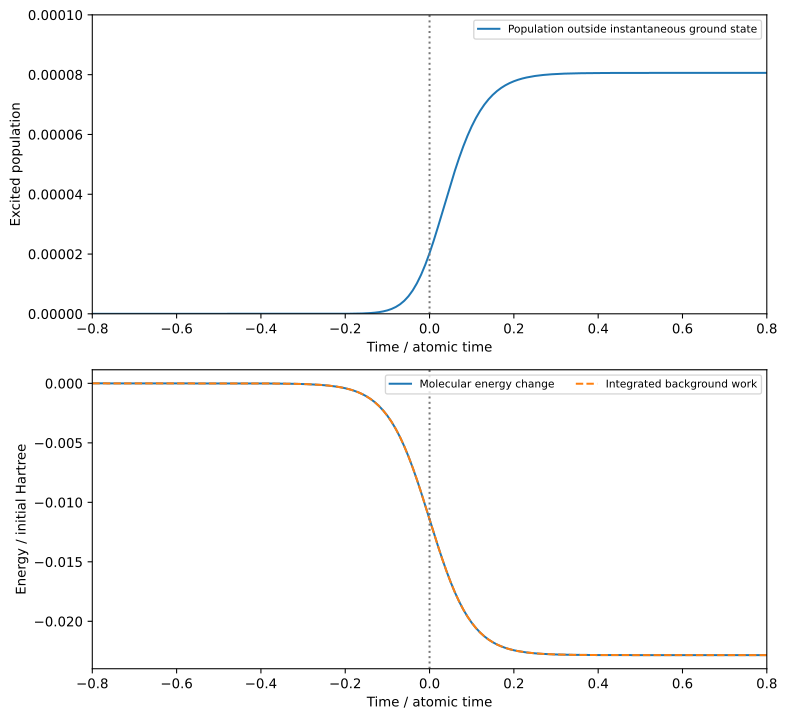
A time-dependent Hamiltonian supplies both excitation and field-to-matter work. The same final change has different responses at different durations. No environment, dissociation continuum or biological repair system is represented. The alpha scan is a response experiment, not a demonstrated viable field history.
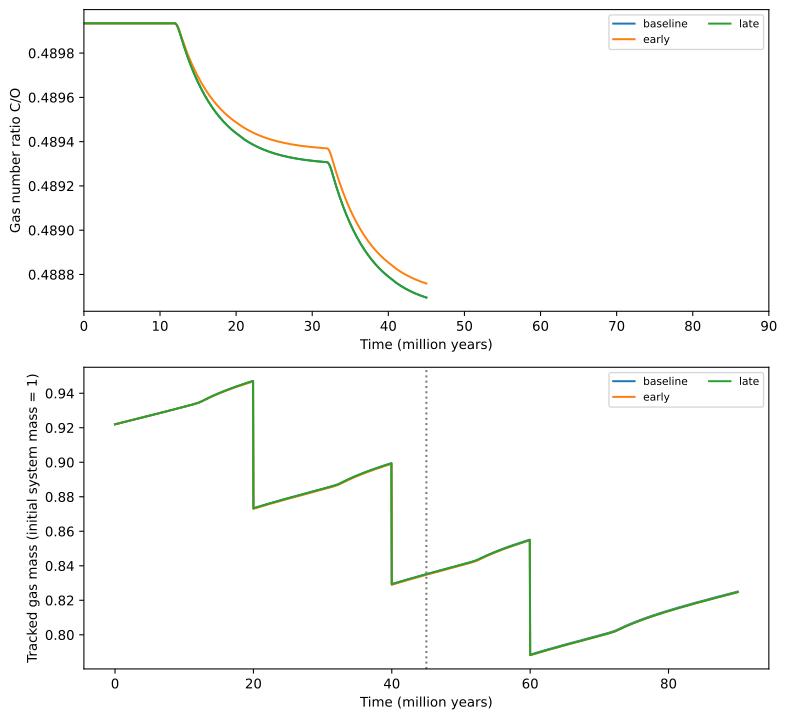
The phase windows are prescribed historical response scenarios, not a derived probability of field formation or reversal. Stars return their computed winds after delays; remaining material stays locked. Multiple generations, transport and dilution can weaken or imitate the surviving pattern. Stable ground-state masses are held fixed in the resonance diagnostic.
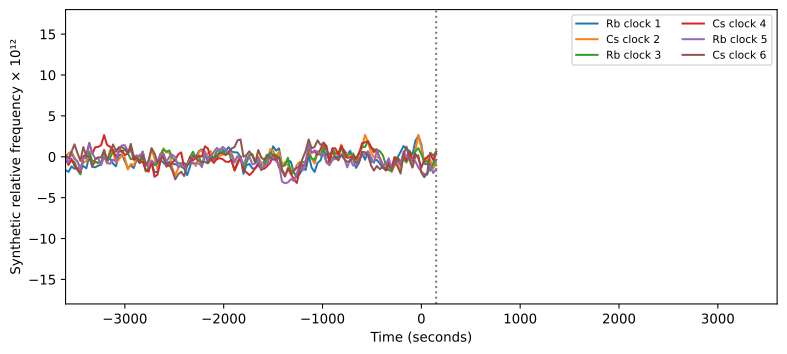
A known-arrival template score alone is insufficient: a common calibration step can have the same projection onto the field template. The channel relationships supply additional information. The accompanying E12 ensemble quantifies recovery; this single realization is illustrative and is not GPS evidence.
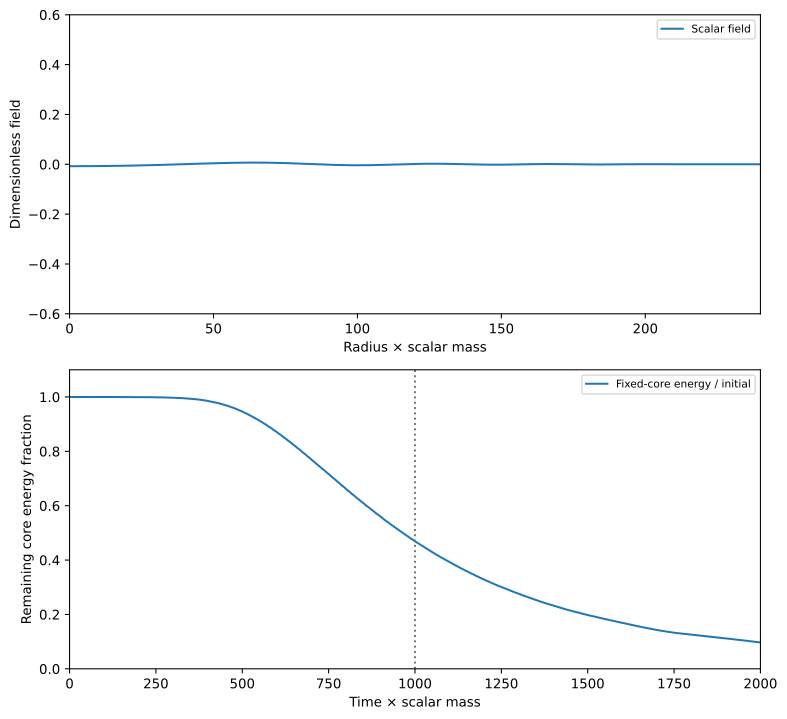
The camera remains fixed while field energy leaves the original core. Larger-box, initial-perturbation and dimensional controls remain selectable. Conversion to seconds requires a scalar mass; the displayed 25-GeV choice yields microscopic durations and is not an allowed cosmological model.
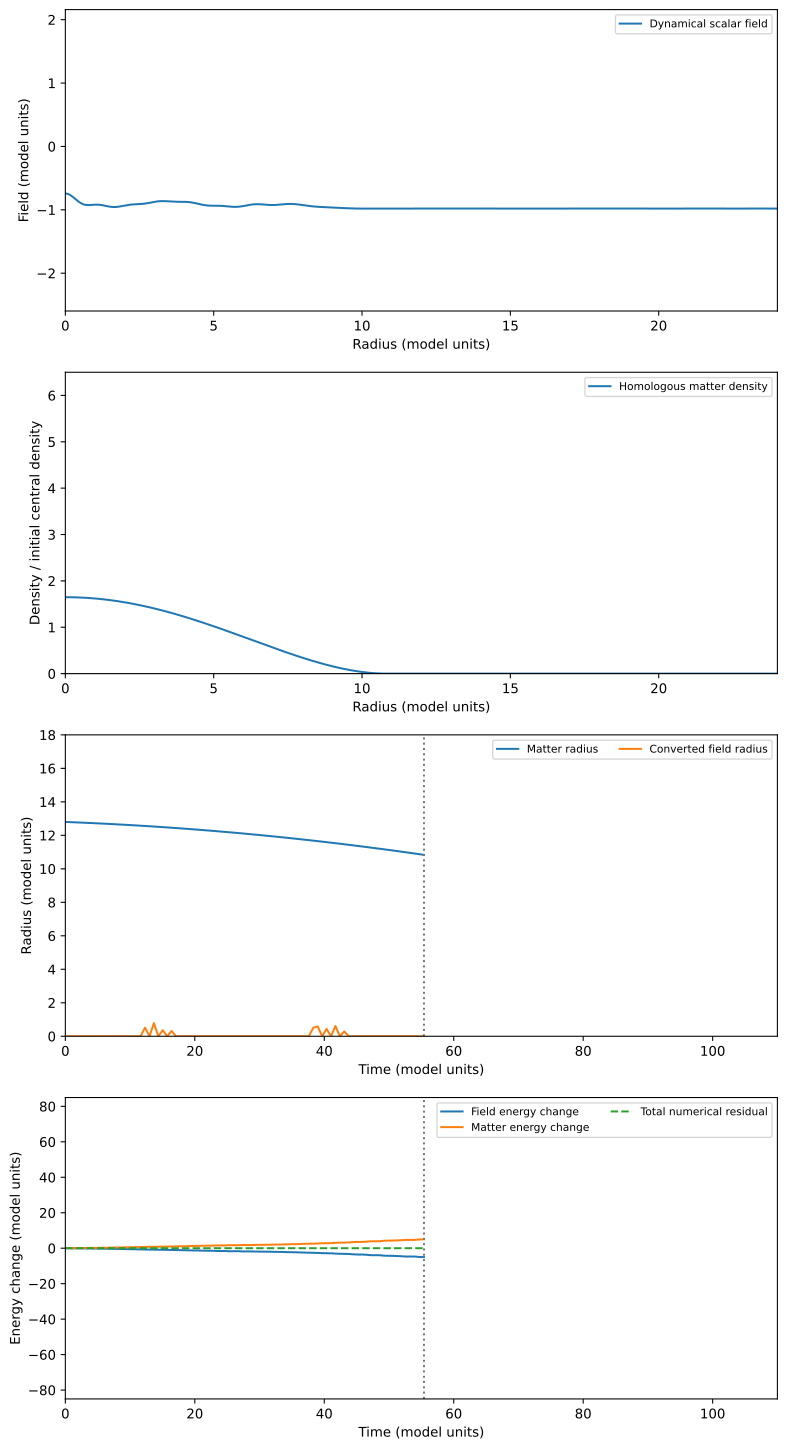
Saved real-time field evolution and a dynamically coupled homologous cloud. The converted boundary escapes the shrinking material source during this finite interval. Density is reconstructed from the exact ansatz and saved radius; field samples are decimated for display only. This is not a full local field–fluid conservation or compact-object calculation. Grid refinement reduces the final energy residual to about 0.35% of exchanged matter energy. A later unresolved interval is not animated as a valid prediction.
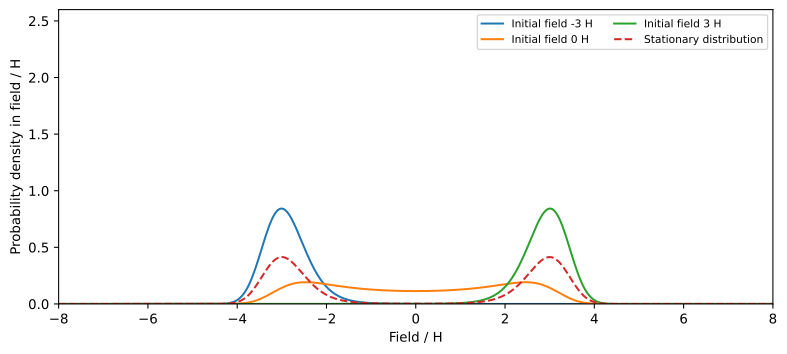
Positive, conservative Fokker–Planck evolution for a specified light spectator at fixed H, compared with the stationary distribution. Explicit initial conditions remain important. Only five saved times are played, with their unequal e-fold spacing labeled. This does not derive reheating, late domains or a cosmological measure.